BHB Salts vs Ketone Esters: How Metatrim BHB Compares

Updated September 2026 · reviewed by the Metatrim BHB Research Team. We are an independent information resource, not a medical provider, and this article is educational rather than medical advice.
BHB salts and ketone esters are the two main forms of exogenous ketones: salts bind beta-hydroxybutyrate to minerals, while esters bind it to an alcohol backbone. Metatrim BHB compares the two on taste, cost, electrolytes and daily use — and explains, honestly, why it uses mineral BHB salts.
BHB salts vs ketone esters, in one place.
- The short version
- Ketone esters raise blood ketones higher and faster but taste harsh and cost far more; BHB salts give a gentler, cheaper rise and double as electrolytes, which is why everyday supplements use them.
- BHB salts
- Beta-hydroxybutyrate bound to magnesium, calcium or sodium — mild, affordable, capsule-friendly, and a source of the minerals low-carb dieters lose.
- Ketone esters
- BHB bound to an alcohol backbone — the strongest, fastest blood-ketone spike, but bitter, expensive and mostly used in research and elite sport.
- What Metatrim BHB uses
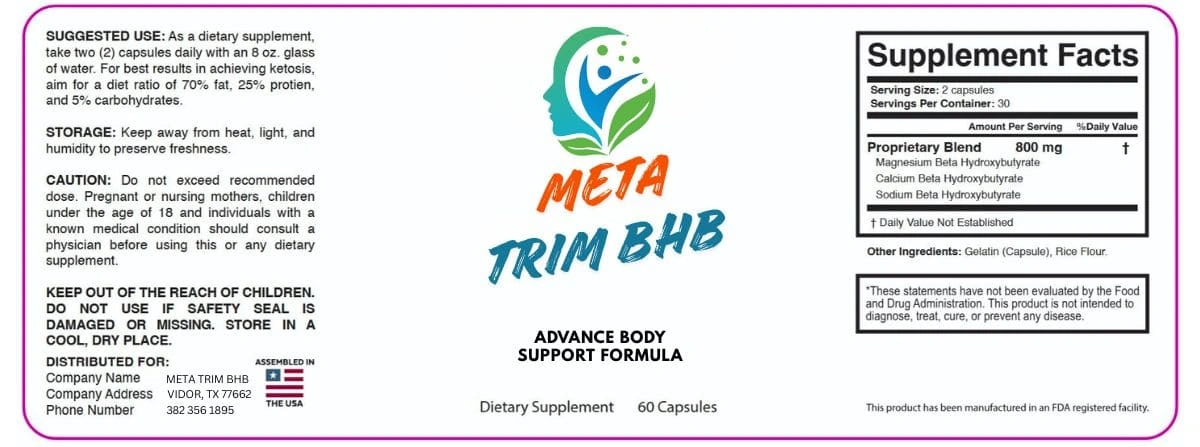
- Mineral BHB salts: an 800 mg blend of magnesium, calcium and sodium beta-hydroxybutyrate per 2-capsule serving.
If you have shopped for exogenous ketones, you have run into two very different products at two very different prices. On one shelf sit capsules and powders labelled BHB salts; on another sit small, costly bottles of ketone esters. They share a goal — raising the beta-hydroxybutyrate in your blood — but they get there in different ways, and the trade-offs matter for anyone deciding what to actually use each day. This comparison walks through both, then explains where a capsule product like Metatrim BHB honestly fits.
What are exogenous ketones, in one sentence?
Exogenous ketones are beta-hydroxybutyrate you take by mouth, rather than the ketones your own liver makes when carbohydrates run low. Your body already produces BHB during fasting or a ketogenic diet; an exogenous product simply supplies that same fuel directly, raising blood ketones for a few hours. The two ways it is packaged — as a mineral salt or as an ester — are what this article compares. Neither one, on its own, creates the fat-adapted state you reach by restricting carbohydrates; both are a temporary top-up rather than a replacement for the diet. In humans, a measured dose of exogenous ketones lifts blood beta-hydroxybutyrate for a matter of hours before the body clears it again (Stubbs et al., “On the Metabolism of Exogenous Ketones in Humans,” Frontiers in Physiology, 2017).
What are BHB salts, and how do they work?
BHB salts are beta-hydroxybutyrate chemically bound to a mineral — usually magnesium, calcium or sodium — to keep it stable and easier on the stomach. When you swallow a capsule, the salt splits into BHB and its mineral partner: the BHB is absorbed and burned by tissues that can use ketones, while the mineral is delivered as an electrolyte. That second job is the quiet advantage of the salt form. Cutting carbohydrates lowers insulin and prompts the kidneys to shed sodium and water, often dragging magnesium down with them, which is why the early-keto slump brings headaches and cramps. We take that mineral pairing apart in our explainer on what ketone salts actually are.
Why the mineral pairing matters
Because the mineral in a BHB salt is an electrolyte, the salt does double duty: it hands over ketone fuel and the very minerals a low-carb diet flushes out. Metatrim BHB uses all three of the established salts — magnesium, calcium and sodium BHB — so you get a spread of electrolytes rather than a single one. For the mineral side of the story, see our companion guide to keto electrolytes.
What are ketone esters, and how are they different?
Ketone esters are beta-hydroxybutyrate bound to an alcohol backbone instead of a mineral, and that chemistry lets them raise blood ketones higher and faster than salts. Because there is no mineral load, an ester can deliver a large dose of BHB without the sodium or magnesium that would come with an equivalent salt serving — useful when the goal is a big, rapid ketone spike. That is exactly why esters are the tool of choice in laboratory studies and among some endurance athletes, where a sharp, measurable rise in blood BHB is the point. Feeding studies in rats showed that ketone-salt supplementation raised circulating beta-hydroxybutyrate without raising blood glucose (Kesl et al., “Effects of exogenous ketone supplementation on blood ketone, glucose, triglyceride, and lipoprotein levels in Sprague-Dawley rats,” Nutrition & Metabolism, 2016).
The catches: taste and price
Ketone esters have two well-known drawbacks. The first is taste: users routinely describe it as bitter and solvent-like, hard to finish, and nothing a flavour system fully hides. The second is cost, which can run to several dollars for a single serving. Between the two, esters rarely make sense as an everyday habit — they are a specialist tool, not a daily driver. Salts trade the ester's peak intensity for something a normal routine can live with.
BHB salts vs ketone esters: the side-by-side
The clearest way to compare exogenous ketones is feature by feature, because each form wins on different points. The table below lines up salts and esters on the things that actually decide which you would reach for. In a controlled trial, a ketone drink that raised blood BHB also lowered circulating ghrelin and reported hunger for several hours (Stubbs et al., “A Ketone Ester Drink Lowers Human Ghrelin and Appetite,” Obesity, 2018).
| Feature | BHB salts | Ketone esters |
|---|---|---|
| Chemistry | BHB bound to magnesium, calcium or sodium | BHB bound to an alcohol backbone |
| Blood-ketone rise | Moderate, gradual | High, rapid |
| Taste | Neutral in capsules; mild in powders | Bitter, solvent-like, hard to finish |
| Cost per serving | Low | High — often several dollars |
| Electrolytes | Yes — the mineral partner is an electrolyte | No meaningful mineral content |
| Typical use | Daily keto support, capsules, home | Research and elite endurance sport |
| Form in Metatrim BHB | Yes — magnesium, calcium & sodium BHB | No |
Which is better for taste, cost and daily use?
For anyone using exogenous ketones day after day, taste and cost usually decide the winner — and on both, BHB salts come out ahead. A capsule salt is tasteless to swallow and a fraction of an ester's price, which makes it something you can keep up for months rather than a one-off experiment. Esters win only when the goal is the highest possible blood-ketone number in a short window, a need most people on a keto diet simply do not have. The table below sums up the everyday trade-off. We weigh the two delivery formats in our guide to BHB capsules vs powder.
| Everyday factor | Better choice | Why |
|---|---|---|
| Taste you can live with | BHB salts | Capsules have no flavour to fight; esters are famously bitter. |
| Cost of a daily habit | BHB salts | Salts cost a fraction of an ester serving, so the routine is affordable. |
| Electrolyte support | BHB salts | The mineral partner replaces sodium, magnesium and calcium lost on keto. |
| Fastest, highest ketone spike | Ketone esters | Esters raise blood BHB higher and faster — useful in sport and research. |
| Convenience on the go | BHB salts | Two capsules with water beat measuring and stomaching a liquid ester. |
See the exact dose in Metatrim BHB
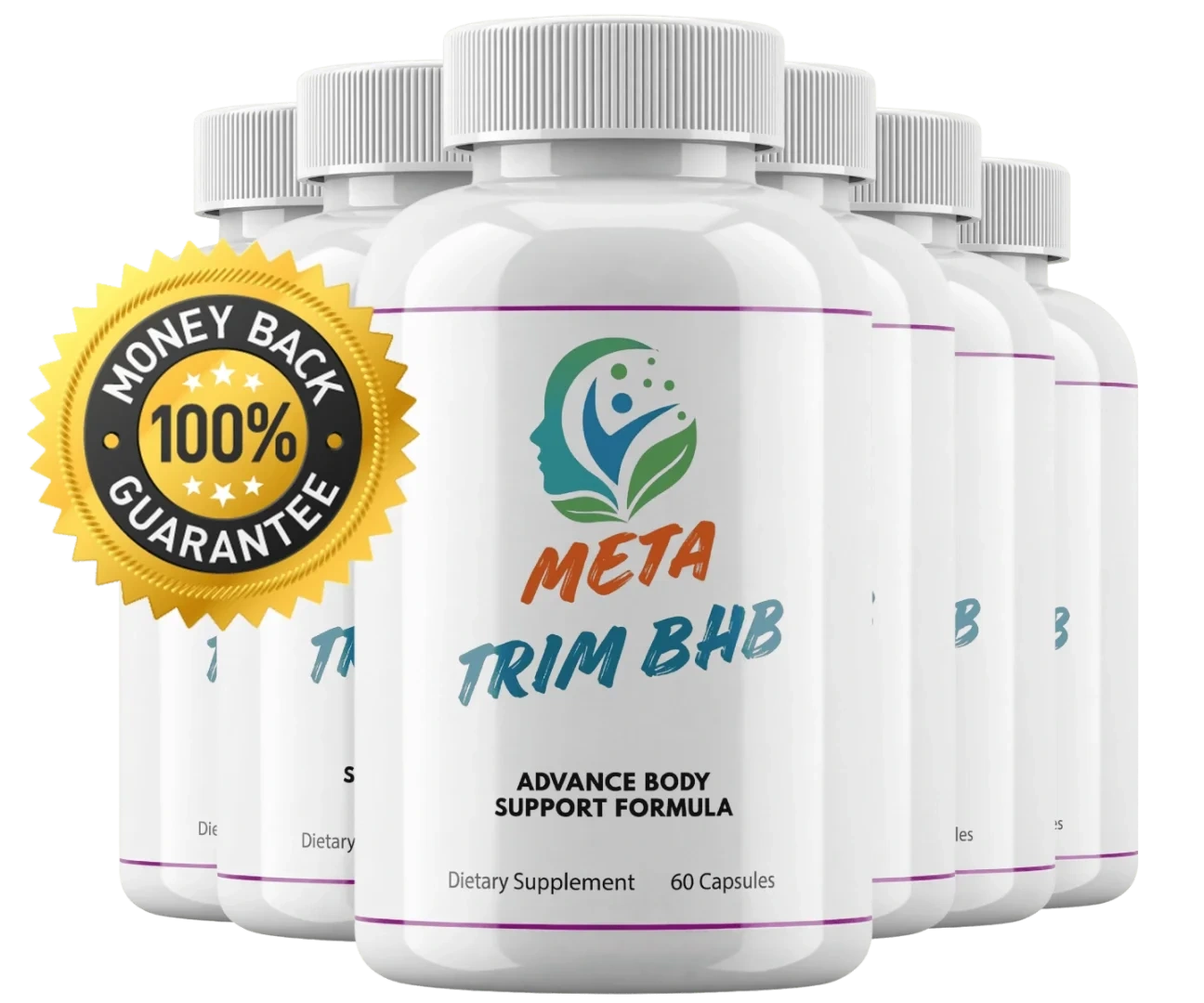
Metatrim BHB puts the practical form — mineral BHB salts — into a simple two-capsule daily dose: an 800 mg blend of magnesium, calcium and sodium beta-hydroxybutyrate, 30 servings per bottle. The six-bottle bundle is the best value at $49 per bottle, with free U.S. shipping and a 60-day guarantee.
Check today's Metatrim BHB pricing — from $49/bottleWhy does Metatrim BHB use mineral salts?
Metatrim BHB uses mineral BHB salts because they match how most people actually take a supplement: daily, at home, without fuss. The salt form solves the two problems that keep esters in the lab — it is affordable enough to use every day and neutral enough to swallow in a capsule — while adding the electrolyte benefit an ester cannot. On a low-carb diet, where sodium and magnesium quietly slip away, that pairing is not a marketing footnote; it is one of the more useful things a BHB product can do.
What the salts deliver per serving
Each 2-capsule serving of Metatrim BHB supplies an 800 mg proprietary blend of the three established BHB salts, with 30 servings in a bottle. That is a sensible everyday amount rather than an ester-style megadose — enough to top up blood ketones and replace lost minerals while you do the real work of keeping carbohydrates low. If you are still deciding whether exogenous ketones belong in your routine at all, start with our primer on what BHB is and how exogenous ketones work.
How should you use exogenous ketones day to day?
Exogenous ketones are best treated as a support around a genuine low-carb diet, not as a substitute for it. With capsule BHB salts, most people take one serving once or twice a day with water — often in the morning to smooth the early-keto transition, or before exercise. The honest expectation is modest: a few-hour rise in blood BHB plus some electrolytes, layered on top of the diet that is doing the heavy lifting. Any product claiming a pill alone will melt fat or replace ketosis deserves a hard look; the evidence does not support it, and neither do we.
New to low-carb eating? Our keto diet for beginners guide covers the food side, and the Metatrim BHB review shows exactly what is in the bottle.
Frequently asked questions
What is the difference between BHB salts and ketone esters?
BHB salts bind beta-hydroxybutyrate to minerals like magnesium, calcium and sodium, while ketone esters bind BHB to an alcohol backbone. Esters push blood ketones higher and faster but taste harsh and cost far more; salts are milder, cheaper and double as electrolytes, which is why everyday keto supplements use them.
Which raises blood ketones more, salts or esters?
Ketone esters raise blood BHB higher and faster than salts, which is why they are used in endurance sport and research. For general keto support the more moderate rise from BHB salts is usually enough, and it comes without the ester's expense and taste.
Why do ketone esters taste so bad?
Ketone esters have a famously bitter, solvent-like taste that many users describe as hard to finish. It comes from the ester chemistry itself, and it is one reason esters stay mostly in labs and elite sport rather than daily routines.
Which form does Metatrim BHB use?
Metatrim BHB uses mineral BHB salts, providing an 800 mg proprietary blend of magnesium, calcium and sodium beta-hydroxybutyrate in each 2-capsule serving, with 30 servings per bottle. That form supplies ketone fuel and the electrolytes low-carb dieters lose, in easy capsules.
Are BHB salts or ketone esters cheaper?
BHB salts are far cheaper per serving than ketone esters. A single ester serving can cost several dollars, while capsule BHB salts are a fraction of that, which makes salts the practical choice for daily, ongoing keto support.
Do exogenous ketones replace a keto diet?
No. Neither BHB salts nor ketone esters put you into nutritional ketosis on their own; that fat-adapted state comes from restricting carbohydrates. Both forms are a temporary top-up of blood ketones that complements the diet rather than replacing it.
See the exact dose in Metatrim BHB →
Metatrim BHB is a dietary supplement, not a treatment for any medical condition. These statements have not been evaluated by the Food and Drug Administration. This product is not intended to diagnose, treat, cure or prevent any disease. Always consult a qualified healthcare professional about your individual needs.
References & further reading
- Examine.com. Ketone Bodies — evidence-based summary. examine.com/supplements/ketone-bodies
- Stubbs BJ, Cox PJ, Evans RD, et al. On the Metabolism of Exogenous Ketones in Humans. Frontiers in Physiology, 2017 (PMID 29163194)
- National Institutes of Health, Office of Dietary Supplements. Magnesium — Fact Sheet for Health Professionals. ods.od.nih.gov/factsheets/Magnesium-HealthProfessional
- National Institutes of Health, Office of Dietary Supplements. Sodium — Fact Sheet for Health Professionals. ods.od.nih.gov/factsheets/Sodium-HealthProfessional
- National Center for Complementary and Integrative Health (NCCIH). Diet and Nutrition. nccih.nih.gov/health/diet-and-nutrition
These references describe the ingredients and ketogenic nutrition in general terms and do not constitute evidence that any product treats, cures or prevents any condition.
Keep reading: what BHB is and how exogenous ketones work · keto electrolytes explained · back to the Metatrim BHB blog · homepage.