How BHB Fuels the Brain: A Metatrim BHB Guide to Ketone Brain Fuel

Updated September 2026 · reviewed by the Metatrim BHB Research Team. We are an independent information resource, not a medical provider, and this article is educational rather than medical advice.
How BHB fuels the brain comes down to one fact: when glucose runs low, the liver makes beta-hydroxybutyrate (BHB) from fat, and the brain can burn that ketone for energy in place of sugar. Metatrim BHB explains, without hype, how ketones become brain fuel, what steady mental energy and keto focus really mean, and where an exogenous BHB supplement honestly fits.
How does BHB fuel the brain, in short?
- The short version
- Your brain normally runs on glucose, but it cannot burn fat directly. When carbs are scarce, the liver turns fat into BHB, which crosses into the brain and is burned as a clean backup fuel — that is how ketones keep the lights on.
- Ketones cross the barrier
- BHB is small and water-soluble, so it passes the blood-brain barrier and neurons take it up and convert it to energy.
- Why it feels steady
- Ketone fuel arrives more evenly than sugar, which is why fat-adapted dieters often describe calmer energy and fewer mid-afternoon crashes.
- What it is not
- BHB is a fuel, not a cure — it does not treat any brain condition, and a supplement supports a keto diet rather than replacing it.
Few ideas in nutrition sound stranger, or more appealing, than a brain running on fat-derived fuel instead of sugar. It is real, well established in physiology, and the reason keto dieters talk about “keto focus.” This guide walks through how BHB fuels the brain, what the science supports, and where a product like Metatrim BHB reasonably fits. The measurement behind that is old and well replicated: brain fuel sampling during prolonged fasting showed ketone bodies supplying a large share of the brain’s energy (Owen et al., “Brain metabolism during fasting,” Journal of Clinical Investigation, 1967).
What does it mean that BHB fuels the brain?
To say that BHB fuels the brain means neurons can take up beta-hydroxybutyrate from the blood and burn it in their mitochondria to make ATP, the energy currency every cell runs on. On an ordinary carb-fed diet the brain is a glucose machine: about two percent of body weight, yet it consumes roughly a fifth of your daily energy, almost all as sugar. But glucose is not the only option — when blood sugar falls, from fasting, long exercise or a low-carb diet, ketone bodies step in, and BHB is the most abundant. Whether topping that ketone supply up matters for an ageing brain is still an open research question rather than a settled one (Cunnane et al., “Can Ketones Help Rescue Brain Fuel Supply in Later Life?” Frontiers in Molecular Neuroscience, 2016).
The key point is that ketones are not a stress signal or a waste product but a deliberate, evolved backup fuel — a fat-derived energy source that keeps thinking going when the pantry is empty.
Why can’t the brain just run on fat directly?
The brain cannot burn fat directly because fatty acids do not cross the blood-brain barrier efficiently, so the body converts fat into ketones the brain can use instead. Long-chain fatty acids are bulky and tightly bound to proteins in the blood, and the barrier that guards the brain is selective about what it admits.
BHB solves the transport problem: it is a small, water-soluble molecule, and the blood-brain barrier carries dedicated monocarboxylate transporters that usher ketones across. Once inside, BHB feeds into the same energy pathway glucose joins. In effect, the liver turns fat into a brain-ready fuel, and BHB is the finished delivery. The sequence by which the liver shifts from glucose to ketone production is set out in detail in a standard review of fuel use during starvation (Cahill, “Fuel metabolism in starvation,” Annual Review of Nutrition, 2006).

How does the brain switch from glucose to ketones?
The brain switches to ketones gradually as blood sugar and liver glycogen fall, raising ketone levels until BHB supplies a growing share of the brain’s fuel. It is not a sudden flip. As glycogen drains over a day or two, the liver accelerates fat breakdown and ketones climb, and over the following weeks the brain up-regulates its ketone transporters — the process called “fat-adaptation.”
Importantly, the brain never runs on ketones alone: the body still makes some glucose through gluconeogenesis, so brain fuel becomes a blend. The table below sketches how that mix shifts as carbohydrate stays low.
| Stage | What is happening | Main brain fuel |
|---|---|---|
| Fed / high-carb | Plenty of dietary glucose and glycogen | Almost entirely glucose; ketones very low. |
| First 1–2 days low-carb | Glycogen draining, ketones starting to rise | Mostly glucose; the wobble of the “keto flu.” |
| Nutritional ketosis | Fat-burning established, blood BHB elevated | A glucose-plus-ketone blend, ketones rising. |
| Prolonged / fasted | Deep, sustained carbohydrate restriction | Ketones can supply a large share of brain energy. |
What does ketone brain fuel feel like — steady energy and focus?
Ketone brain fuel is often described as steadier than sugar because BHB is delivered to neurons more evenly, without the spike-and-crash of a high-carb snack. That description is subjective, but consistent, and it has a plausible mechanism: a fuel arriving at a more constant rate should support a steadier supply of energy.
Do ketones really mean fewer energy crashes?
Blood sugar swings are a familiar cause of the mid-afternoon slump: a carb-heavy lunch drives glucose up, insulin brings it down, and the dip leaves you foggy and reaching for coffee. Because BHB does not trigger that insulin rollercoaster, many people find their energy flattens out on keto once adapted. It is fair to call this bhb mental energy — not a stimulant high, but the absence of the crash.
Is “keto focus” real or just hype?
Honesty matters here. Reports of sharper keto focus are real and common, but the controlled human evidence on ketones and cognition is still early, small and mixed. Some studies of exogenous ketones show modest effects on cognitive tasks; others show little. The reasonable position is that ketones are a legitimate brain fuel many people find steadying, not a proven nootropic. Treat anyone promising guaranteed genius from a capsule with suspicion.

How much of the brain’s energy can ketones supply?
Ketones can supply a substantial minority to a majority of the brain’s energy during deep, sustained carbohydrate restriction, though the exact share depends on how low carbs go and how long they stay there. Classic fasting research found the brain drew a large fraction of its fuel from ketones, sharply cutting glucose demand. On a typical keto diet the share is smaller but still meaningful. The table below is illustrative; numbers vary.
| Situation | Approximate ketone contribution to brain fuel | Notes |
|---|---|---|
| Normal mixed diet | Near zero | Glucose covers essentially all brain energy. |
| Established keto diet | A modest but real share | Glucose still leads; ketones fill a growing gap. |
| Extended fasting | A large share | Ketones spare glucose and reduce protein breakdown. |
| Exogenous BHB alone | A short-lived top-up | Raises blood BHB for hours; does not create ketosis. |
The last row is the honest caveat about supplements: swallowing BHB lifts blood ketones for a few hours, but that is a top-up, not the fat-adapted state you build by eating low-carb. For the full picture, see our explainer on what BHB is and how exogenous ketones work.
Where does Metatrim BHB fit in fueling the brain?
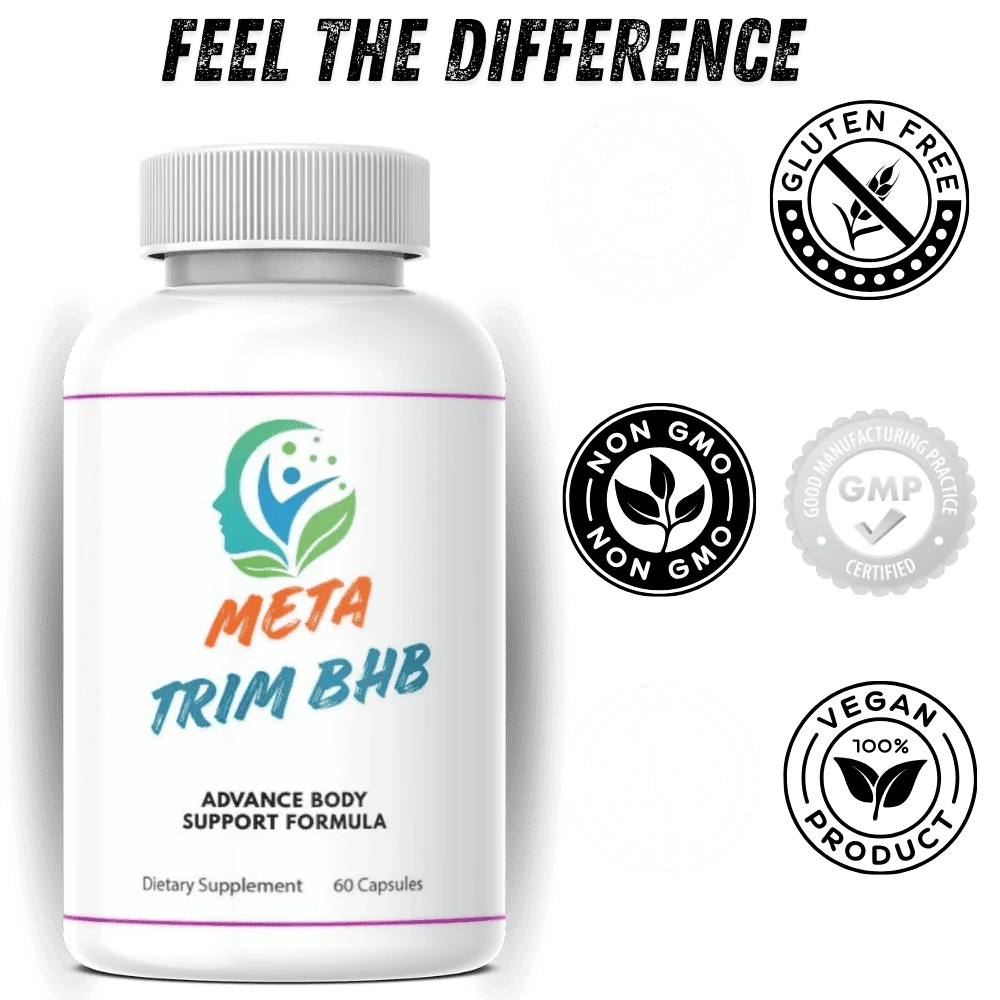
Metatrim BHB fits as a source of exogenous ketone fuel and electrolyte minerals that complements a low-carb diet, most useful in the early weeks while your own ketone production catches up. It supplies beta-hydroxybutyrate bound to magnesium, calcium and sodium, so each serving delivers ketone fuel plus the electrolytes keto flushes out — and low sodium or magnesium causes exactly the headaches and fog people blame on “keto brain.” Sodium does most of the heavy lifting here, as our guide to sodium BHB and the keto flu explains.
What it does not do is put you into ketosis by itself or act as a brain medicine — it supports a genuine keto effort, not a shortcut around one. In plain numbers, that is an 800 mg BHB blend in a two-capsule serving, thirty servings a bottle. We define that state carefully in our explainer on ketosis explained.
Fuel the transition with ketones
See the exact dose in Metatrim BHB — an 800 mg blend of magnesium, calcium and sodium BHB, two capsules a day, to top up ketone fuel and replace the electrolytes keto burns through. The six-bottle bundle is the best value at $49 per bottle, with free U.S. shipping and a 60-day guarantee.
Check today's Metatrim BHB pricing — from $49/bottleHow can you support steady brain fuel on keto?
You support steady brain fuel on keto by keeping carbohydrates genuinely low, staying on top of electrolytes and hydration, and giving your brain a few weeks to adapt. The switch to ketones is a gradual up-regulation, not an overnight change, and most early “fog” is electrolyte-related rather than a lack of fuel.
Mind your electrolytes first
Sodium, magnesium and potassium fall as insulin drops on low-carb, and shortfalls show up as headache, fatigue and poor concentration. Salting food, eating magnesium-rich foods and, if useful, a BHB salt that carries those minerals all help. Our guide to keto electrolytes goes deeper.
Give adaptation time
Judge how keto feels for your head after two to four consistent weeks, not two days. The transporters that carry BHB into the brain grow more efficient with sustained ketosis.
Set honest expectations
Ketones are a steadying fuel for many people, not a guarantee of superhuman focus. Sleep, stress and overall diet quality still do most of the heavy lifting for how your brain feels.
Frequently asked questions
How does BHB fuel the brain?
BHB fuels the brain by crossing the blood-brain barrier and being burned by neurons in place of glucose. When carbohydrates are scarce, the liver makes BHB from fat, it travels in the blood, and brain cells convert it to energy in their mitochondria, keeping the brain supplied when blood sugar is low.
Can the brain really run on ketones instead of glucose?
Yes. The brain cannot burn fat directly, but it can burn ketones. During prolonged carbohydrate restriction or fasting, ketone bodies such as BHB can supply a large share of the brain's energy, alongside the glucose the body still makes from other sources. Ketones supplement rather than fully replace glucose.
Does BHB give you more mental energy and focus?
Many keto dieters report steadier mental energy and focus once they are fat-adapted, which fits the idea of a fuel that does not spike and crash like sugar. The human evidence is still early and mixed, so BHB should be seen as supportive of steady energy rather than a proven cognitive enhancer.
How is BHB different from a sugar or caffeine boost for the brain?
Sugar raises blood glucose quickly and is often followed by a dip, while caffeine is a stimulant that does not supply calories. BHB is an actual fuel the brain burns, delivered more evenly, so the appeal is steadiness rather than a sharp peak followed by a crash.
How much BHB is in Metatrim BHB?
Metatrim BHB provides an 800 mg proprietary blend of magnesium, calcium and sodium beta-hydroxybutyrate in each 2-capsule serving, with 30 servings per bottle. It is designed to complement a low-carb diet, not to replace it.
Can Metatrim BHB improve memory or treat brain conditions?
No. Metatrim BHB is a dietary supplement, not a medicine, and it is not intended to diagnose, treat, cure or prevent any disease, including memory or neurological conditions. It is meant to supply ketone fuel and electrolytes to support a keto lifestyle.
Support steady keto energy with Metatrim BHB →
Metatrim BHB is a dietary supplement, not a treatment for any medical condition. These statements have not been evaluated by the Food and Drug Administration. This product is not intended to diagnose, treat, cure or prevent any disease. Always consult a qualified healthcare professional about your individual needs.
References & further reading
- Cahill GF Jr. Fuel metabolism in starvation. Annual Review of Nutrition, 2006 (PMID 16848698)
- Owen OE, Morgan AP, Kemp HG, et al. Brain metabolism during fasting. Journal of Clinical Investigation, 1967 (PMID 6061736)
- Examine.com. Ketone Bodies — evidence-based summary. examine.com/supplements/ketone-bodies
- National Center for Complementary and Integrative Health (NCCIH). Diet and Nutrition. nccih.nih.gov/health/diet-and-nutrition
- National Institutes of Health, Office of Dietary Supplements. Magnesium — Fact Sheet for Health Professionals. ods.od.nih.gov/factsheets/Magnesium-HealthProfessional
These references describe ketone metabolism and ketogenic nutrition in general terms and do not constitute evidence that any product treats, cures or prevents any condition.
Keep reading: what BHB is and how exogenous ketones work · keto electrolytes explained · back to the Metatrim BHB blog · homepage.